Chiropractic billing codes
2026-10-18 · 9 min read
Four codes, five regions, one modifier. Nearly every chiropractic billing dispute reduces to whether the note counted the regions the code claims, and whether the care is active or maintenance.

The four CMT codes
| Code | Regions | Note |
|---|---|---|
| 98940 | 1–2 spinal | The default for a focused visit |
| 98941 | 3–4 spinal | The most-billed and most-reviewed |
| 98942 | 5 spinal | Every region, every visit, draws questions |
| 98943 | Extraspinal | Not covered by Medicare — cash or commercial |
All four are untimed: one unit per visit whatever the clock says. Minutes matter only for the timed codes that might sit beside them, such as 97140 manual therapy.
Counting regions
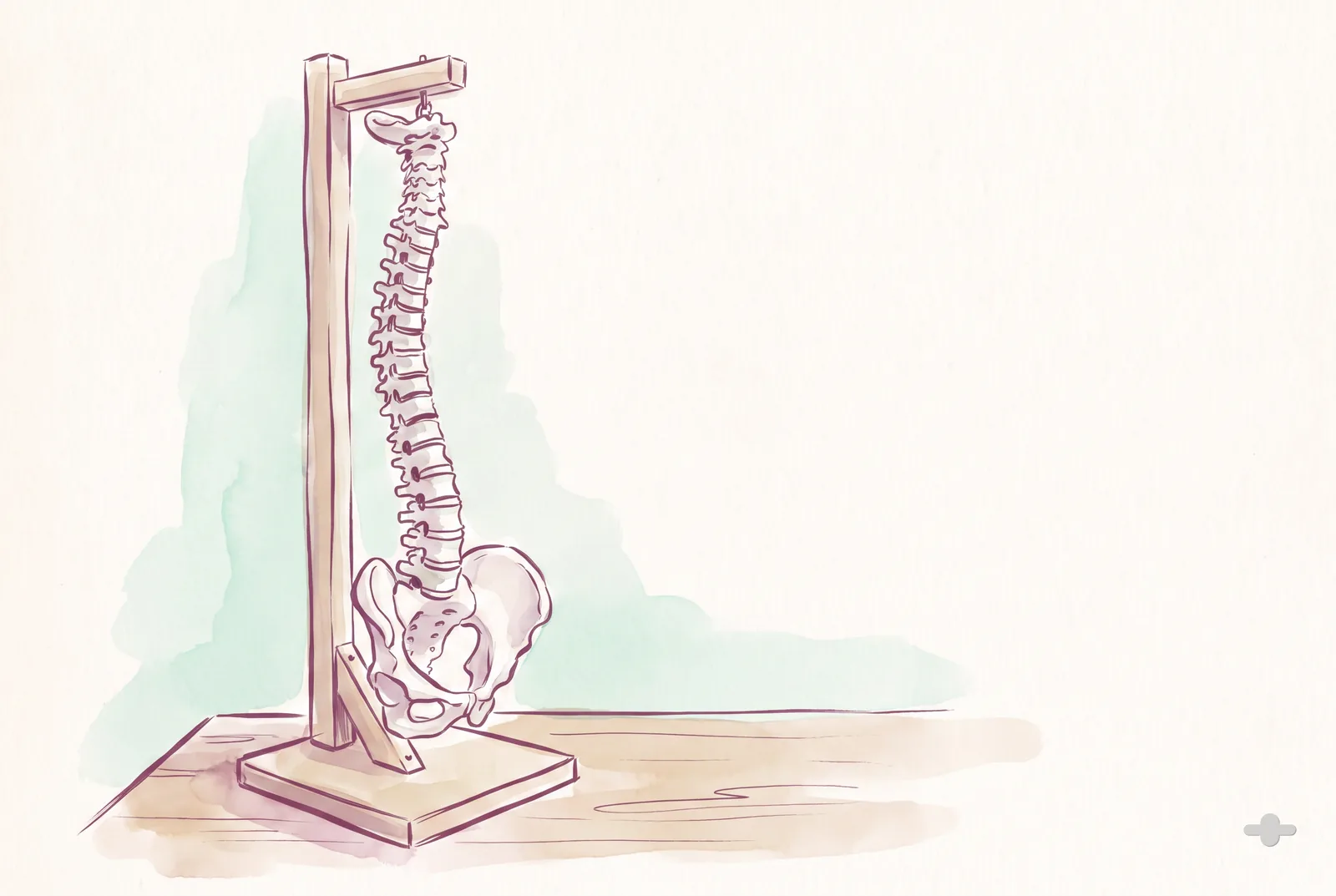
Five spinal regions: cervical, thoracic, lumbar, sacral, pelvic. The two that catch people are the last two — the sacrum and the sacroiliac joint are separate regions, so adjusting both is two, not one. Inside a region, segment count is irrelevant: C2, C5 and C7 is one region and one code tier.
The note counts, not the intention
If the objective section names two regions and the claim says 98941, the claim is wrong — regardless of what happened in the room. The daily note builder puts the region line where you cannot skip it.
The AT modifier
Medicare covers chiropractic manipulation only for active treatment of subluxation. Without AT the claim reads as maintenance and is denied; with AT on a record that reads like maintenance, it is a compliance problem rather than a coding one.
In practice that makes AT a clinical statement wearing a billing costume. The safe habit is to answer the active-versus-maintenance question in the assessment section, in words, on every visit — and to let the modifier follow that sentence rather than the other way round.
E/M on the same day
A same-day evaluation and management service needs modifier 25 and needs to stand alone. The test: delete the manipulation from the note. Is there still a documented history, examination and decision that would justify an E/M by itself? If not, the E/M does not belong on the claim.
A re-examination attached to every visit is not a re-examination; it is a habit with a code.
What an audit looks at
Four things, in order. Region documentation against the code tier. The AT modifier against notes that describe change. Frequency — a visit count that does not taper against a presentation that is improving. And the E/M pattern. None of them is about technique, and none of them is fixed after the fact.
The cheapest defence is a measured number recorded before and after the adjustment on most visits. The range of motion chart gives you the reference to compare it against, and the chiropractic SOAP note examples show where that number sits in a daily note. Whether your system makes this easy is most of what separates one chiropractic EHR from another.
Red flag — refer out
Suspected fracture, an unstable segment, progressive neurological deficit, cauda equina signs or an unexplained systemic picture: no code applies, because no adjustment should happen.
CPT is a trademark of the American Medical Association. Coverage rules vary by payer and by state; your own contract governs.
Sources
- American Medical Association — Current Procedural Terminology (CPT) — CPT is an AMA trademark; the official descriptors are the AMA's and are paraphrased here, never reproduced · read 2026-09-04
Keep reading
CPT 97116: gait training
Timed units, the skilled gait note, and where 97116 ends and 97530 or 97112 begin.
CPT 95851: range of motion measurements
When ROM measurement bills: the NCCI edits, untimed per-region units and the 3-unit MUE.
Physical therapy modality CPT codes
Supervised vs timed modalities, 97010 bundling, G0283 vs 97014, 97039 and 97113.
Physical therapy SOAP note generator
Assemble a defensible physical therapy SOAP note section by section.
Published 2026-09-04 · reviewed 2026-10-18