Chiropractic CPT code lookup
Four manipulation codes, five spinal regions and one modifier decide almost every chiropractic claim. The count is by region, never by segment — and the region list is shorter and stranger than most people remember.
9 of 9 codes
- 98940untimed · 1 unit
Chiropractic manipulative treatment, 1–2 regions
Spinal manipulation of one or two of the five spinal regions.
watch Region count, not segment count. The five regions are cervical, thoracic, lumbar, sacral and pelvic.
- 98941untimed · 1 unit
CMT, 3–4 regions
Spinal manipulation of three or four spinal regions.
watch The most-billed CMT code and the one most often reviewed for region documentation.
- 98942untimed · 1 unit
CMT, 5 regions
Spinal manipulation of all five spinal regions in one visit.
watch Five regions on a routine visit invites a question. Answer it in the note first.
- 98943untimed · 1 unit
Extraspinal manipulative treatment
Manipulation of one or more extraspinal regions: head, extremities, rib cage, abdomen.
watch Medicare does not cover it. Cash or commercial only, and say so up front.
- 99202untimed · 1 unit
New patient E/M, straightforward
A new-patient office visit at the lowest medical-decision-making level.
watch An E/M on the same day as CMT needs a separately identifiable service and the 25 modifier.
- 99203untimed · 1 unit
New patient E/M, low complexity
A new-patient office visit with low-level medical decision making.
watch Same 25-modifier rule; the documentation must stand on its own without the manipulation.
- 99212untimed · 1 unit
Established patient E/M, straightforward
A brief established-patient visit.
watch Routine re-exams folded into every visit are the classic overbill pattern.
- 97140timed · 15 min
Manual therapy
Soft-tissue and joint mobilisation performed in addition to manipulation.
watch Billed with CMT only for a different region, with the 59/XS modifier and a note that says which.
- 97012untimed · 1 unit
Mechanical traction
Supervised mechanical traction, one unit per visit.
watch Untimed. Bundling questions come up when it is billed every visit.
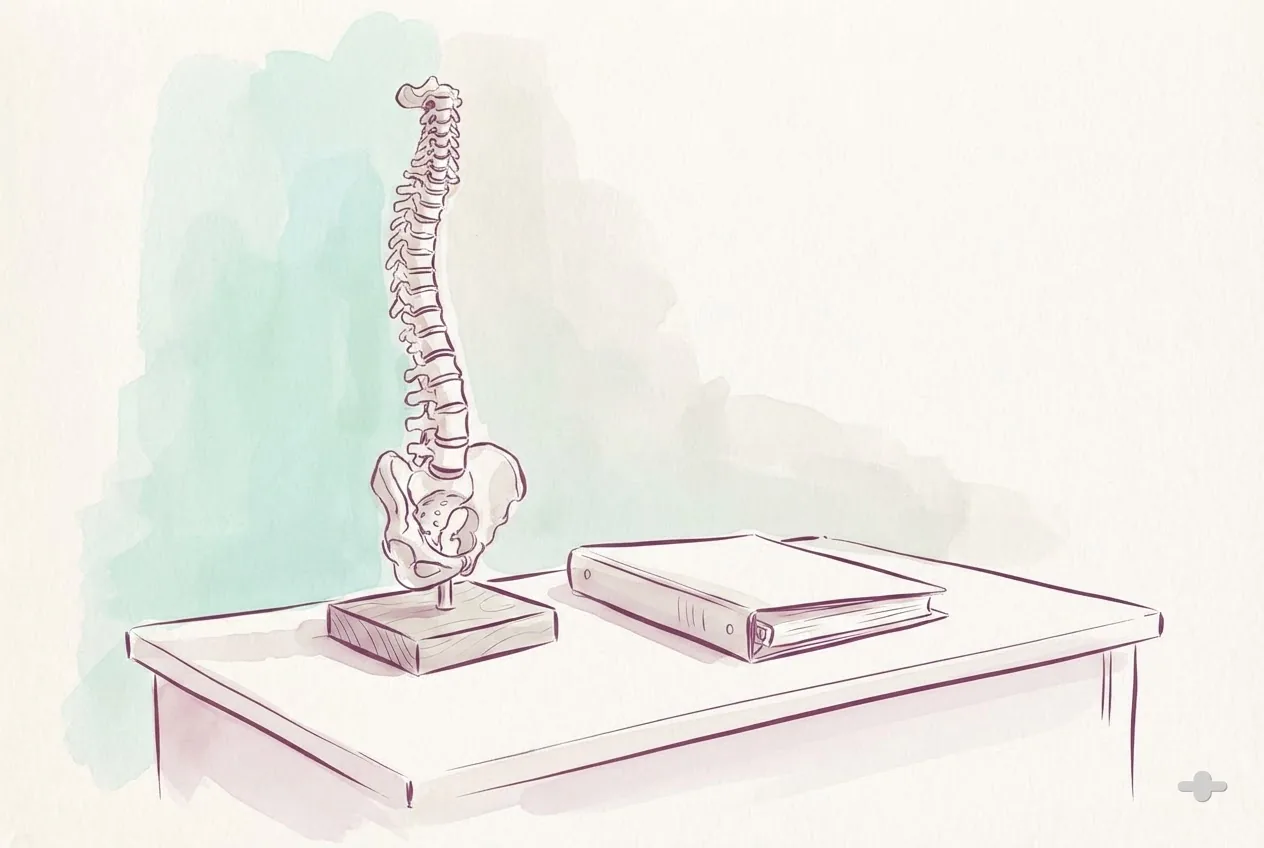
The five regions, exactly
| Region | What counts inside it |
|---|---|
| Cervical | Occiput to C7, and the atlanto-occipital joint |
| Thoracic | T1 to T12, and the costovertebral and costotransverse joints |
| Lumbar | L1 to L5 |
| Sacral | The sacrum |
| Pelvic | The sacroiliac joint — the pelvic region, not the sacrum itself |
Sacral and pelvic are separate regions, which surprises people: adjusting the sacrum and the sacroiliac joint is two regions, not one. Adjusting C2, C5 and C7 is still one.
The AT modifier
Medicare covers chiropractic manipulation only for active treatment of subluxation. Without AT the claim reads as maintenance and is denied; with AT on a record that reads like maintenance, it is a compliance problem rather than a coding one.
98943 is not a Medicare code
Extraspinal manipulation is a legitimate service and a non-covered one. Take it as cash, say so before the visit, and keep the ABN on file rather than discovering the problem at the remittance.
E/M on the same day
A same-day evaluation and management service needs the 25 modifier and needs to survive being read on its own: if you delete the manipulation from the note, is there still a documented E/M service? A re-exam attached to every visit is the pattern reviewers look for. The daily note builder keeps the two separated on the page for exactly this reason.
Red flag — refer out
Manipulation is contraindicated over an unstable segment. Progressive neurological deficit, suspected fracture, cauda equina signs or unexplained weight loss end the visit and start a referral.
CPT is a trademark of the American Medical Association; the summaries here are ours, not the AMA descriptors. Coverage rules vary by payer and by state — your own contract is the authority.
Sources
- American Medical Association — Current Procedural Terminology (CPT) — CPT is an AMA trademark; the official descriptors are the AMA's and are paraphrased here, never reproduced · read 2026-09-04
Keep reading
Superbill generator
Build a printable superbill a cash patient can submit for reimbursement.
CPT 97110: therapeutic exercise
What 97110 covers, how the units are counted and what documentation must say.
CPT 97530: therapeutic activities
How 97530 differs from 97110, and when payers expect one over the other.
Plan of care builder
Turn goals, frequency and duration into a plan of care a payer will accept.