CPT 97530: therapeutic activities
2026-09-04 · 7 min read
97530 is the code for the task, not the tissue. It is the right choice more often than it is used, and the wrong one whenever the note describes an exercise with a functional-sounding name.
What it covers
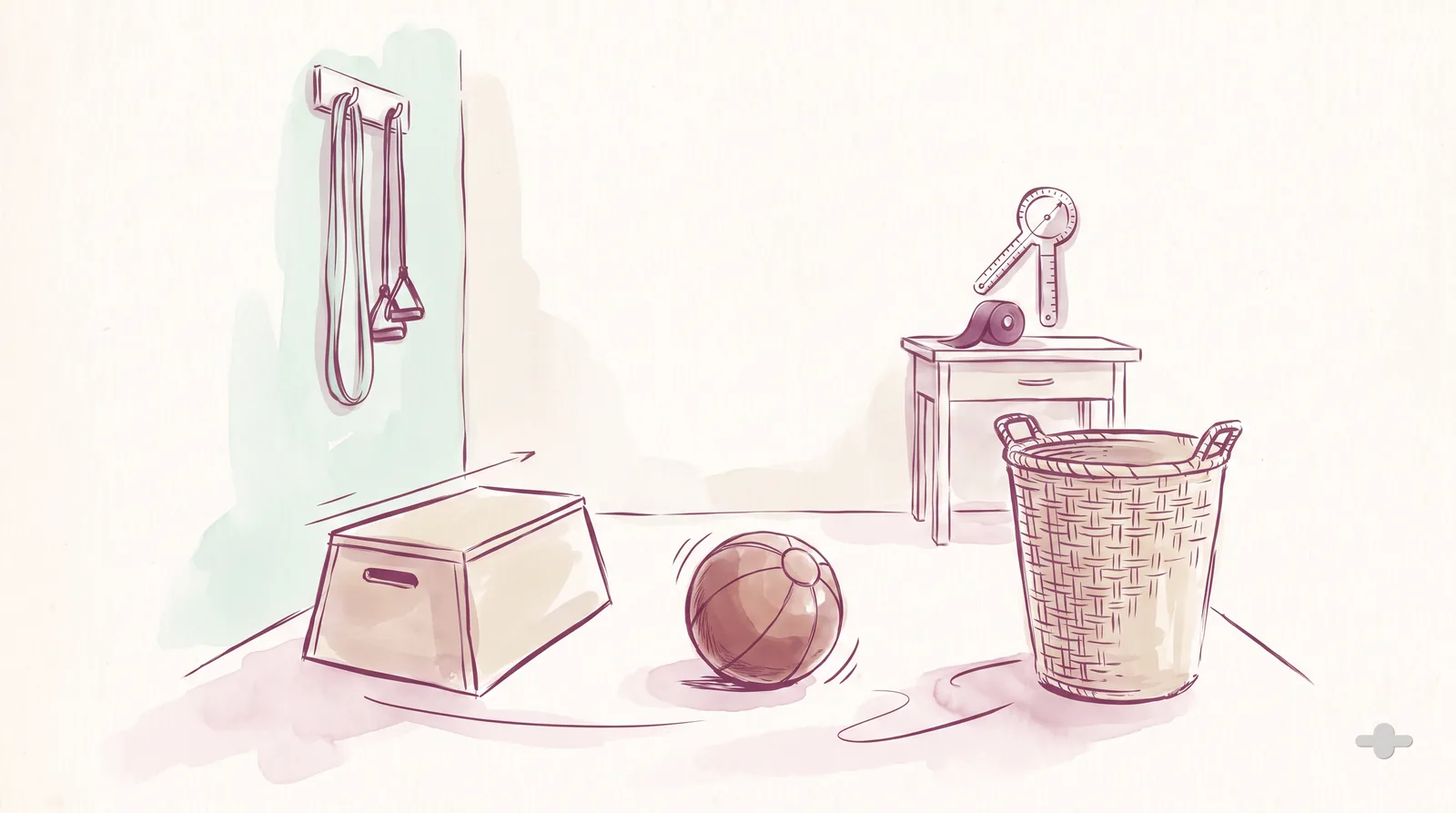
97530 is dynamic activity used to improve functional performance — lifting, carrying, reaching, transfers, stair negotiation as part of a task. Like 97110 it is timed in 15-minute units of direct contact, and like 97110 the descriptor is broad enough that the note has to carry the meaning.
The distinguishing feature is that the activity has a purpose outside the clinic. You are not training a muscle in order to later use it; you are training the use.
The line against 97110
| Activity | Code | Because |
|---|---|---|
| Seated knee extension, 3 × 12 | 97110 | An isolated component with a load target |
| Step-up onto a 20 cm box, 3 × 10 | 97110 | Still a component drilled for quality |
| Lift a 6 kg box floor-to-shelf, 4 × 5 | 97530 | A whole task with a real-world target |
| Carry a bag up eight stairs and turn | 97530 | Sequenced, multi-joint, functional |
| Practise the transfer the patient failed at home | 97530 | The task is the goal, not the means |
Payers do not object to either code. They object to a note where the intervention described is plainly one thing and the code billed is the other — usually because 97530 pays slightly differently and someone noticed.
Billing it with 97140
97530 and 97140 in the same visit is the pairing that draws edits. They are separable when they addressed different body regions, or ran in clearly distinct blocks of time, and the modifier — XS for a separate structure, XU for a non-overlapping service, or a plain 59 where the payer still wants it — has to be backed by a note that says which.
A modifier is not an explanation
Appending 59 because the claim rejected without it, on a note that describes one continuous shoulder session, converts a coding question into a compliance one. Fix the note or drop the line.
How to write it
Name the task, the load, the environment and the limiter. “Floor-to-shelf lift, 6 kg crate to 140 cm, 4 × 5, with cueing to keep the load close; limited by grip fatigue rather than back pain today” is unarguable. It tells a reviewer what happened, what it was for, and what you learned from it.
The functional goal in the plan of care and the task in the note should recognise each other.
If the plan says “return to lifting the toddler from the cot”, the 97530 minutes ought to look like lifting something from below waist height. The plan of care builder keeps those goals where you can see them while you write.
When not to use it
Not for a warm-up. Not for general conditioning with no task attached. Not for education — that is self-care training. And not as a relabelling of the same exercise list that has been 97110 for six visits, which is the version reviewers spot instantly because the objective section did not change on the visit the code did.
Red flag — refer out
A functional task that reproduces radicular symptoms into the foot, or that a patient cannot attempt because of new weakness, ends the session and starts a referral.
Unit rules: CMS Pub. 100-04 Medicare Claims Processing Manual, Chapter 5, §20.2.C — Counting Minutes for Timed Codes in 15 Minute Units, read 2026-10-18. CPT is an AMA trademark; the descriptions here are ours.
Sources
- American Medical Association — Current Procedural Terminology (CPT) — CPT is an AMA trademark; the official descriptors are the AMA's and are paraphrased here, never reproduced · read 2026-09-04
- CMS Pub. 100-04, Medicare Claims Processing Manual, Chapter 5 §20.2.C — counting minutes for timed codes in 15-minute units · read 2026-10-18
Keep reading
CPT 97140: manual therapy
Manual therapy billing, the 59/XS modifier question and the region rules.
CPT 97112: neuromuscular re-education
Balance, proprioception and coordination work: what earns 97112.
Physical therapy evaluation CPT codes
97161-97163 complexity tiers and 97164 re-evaluation, decided by the elements.
Chiropractic SOAP notes: three examples
Daily notes for an acute lumbar case, a maintenance visit and a re-exam.
Published 2026-09-04 · reviewed 2026-09-04