Goniometer measurement
2026-09-04 · 8 min read
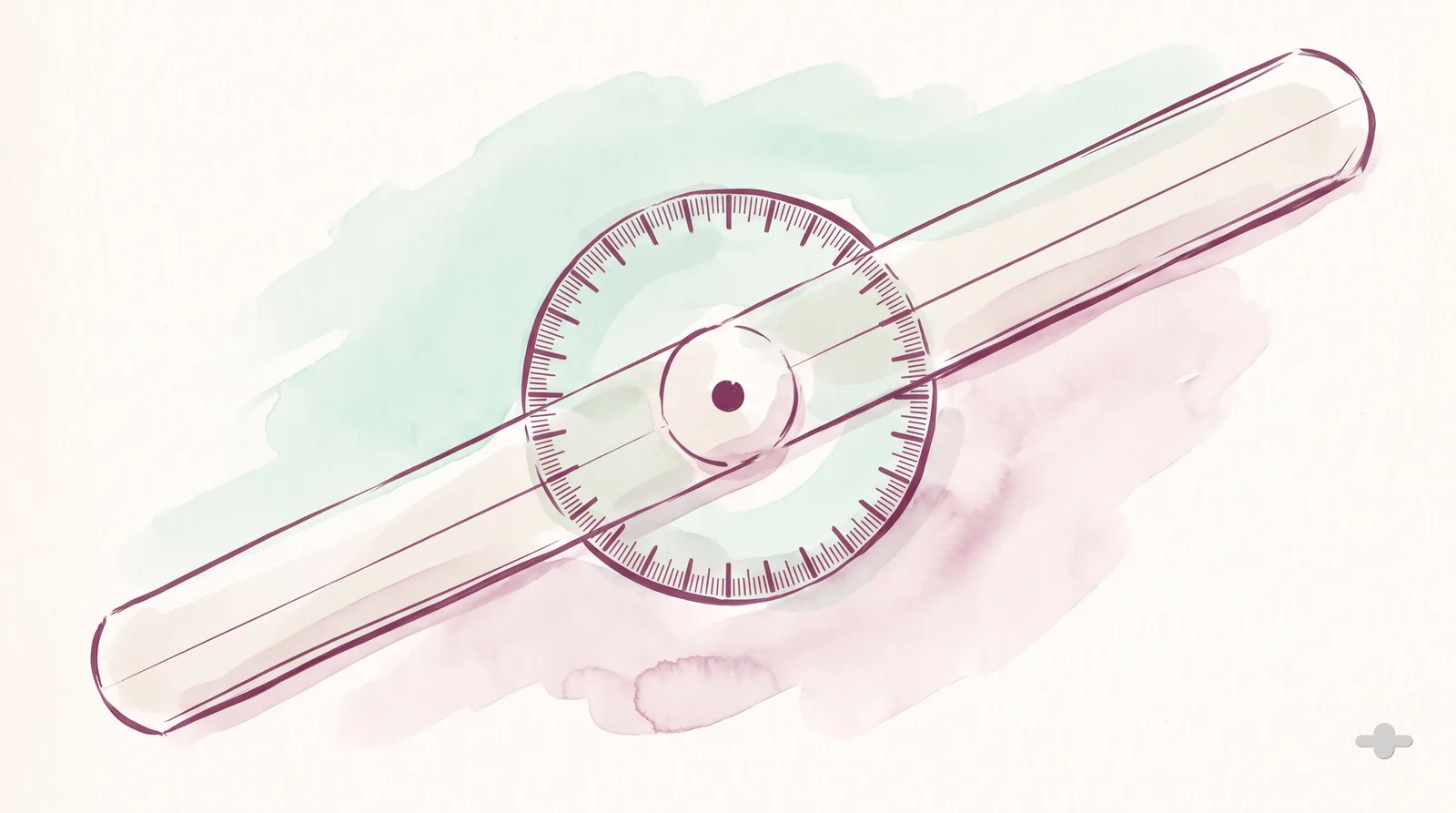
A goniometer is a protractor with two arms. Everything that makes a reading trustworthy happens before you look at the scale — in the position, the landmarks and the fact that you wrote both down.
The three parts
| Part | Where it goes |
|---|---|
| Fulcrum | Over the joint axis — the landmark, not the middle of the limb |
| Stationary arm | Along the segment that is not moving |
| Moving arm | Along the segment that is |
Which landmark counts as the axis differs by joint — lateral epicondyle at the elbow, greater trochanter at the hip, external auditory meatus for cervical flexion. The ROM chart lists the axis beside every reference value, because the number is meaningless without it.
The method that repeats
Position first, and the same position every time. Soft-tissue tension changes with joint position, so a shoulder measured supine and re-measured seated has not been re-measured. Then landmarks, marked if the episode will run for weeks. Then the reading — taken at the end of available range, not at the point where the patient reports discomfort, unless you record that you did.
Write down the position and the landmark alongside the number. It costs four words and it is the difference between a re-test that means something and one that generates an argument.
Record the end-feel too
A hard capsular end-feel and a soft guarded one at the same number of degrees are different clinical situations with different prognoses. The degrees go in the objective section; the end-feel belongs beside them.
The error to expect
Intra-rater reliability — you measuring twice — is consistently better than inter-rater reliability, and both are better at joints with clean bony landmarks than at the spine. Practically that means a change of a few degrees in your own hands on the same patient is probably noise, and a change of the same size between two clinicians certainly is.
Repeatability beats precision. A number you can reproduce is worth more than a number that is closer to the truth once.
Two habits shrink the error more than any equipment upgrade: the same clinician re-measures within an episode, and the reference is the patient’s other side rather than a population table.
When to use something else
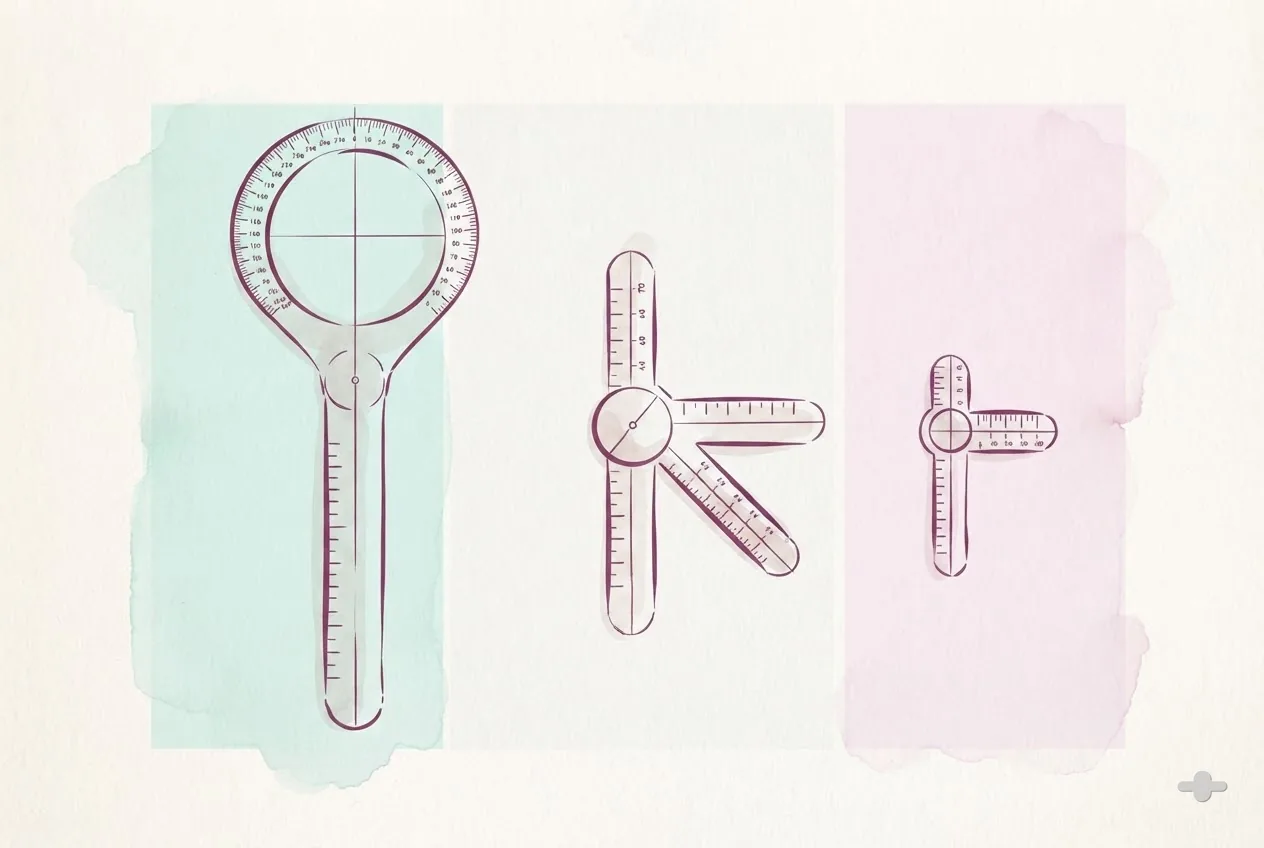
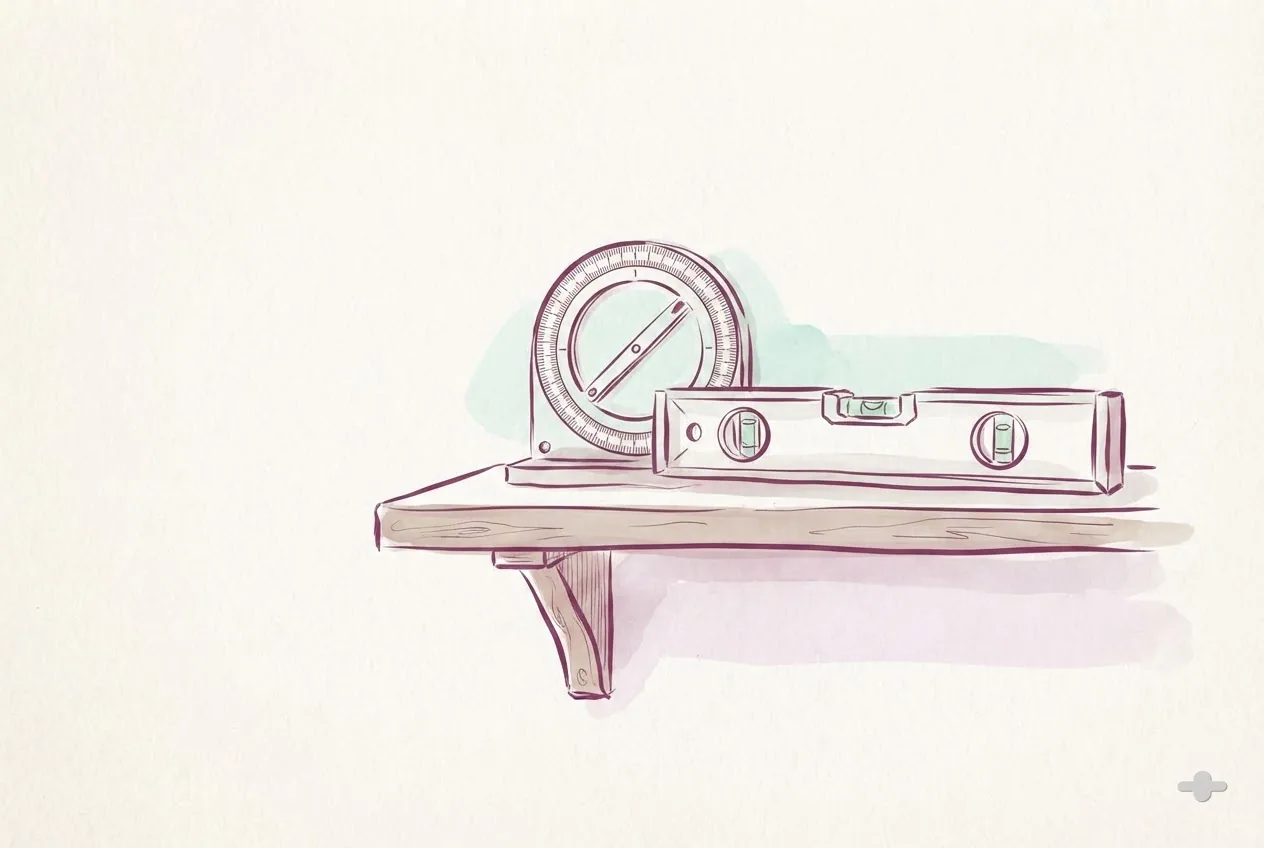
For the lumbar spine, two inclinometers beat a goniometer outright, because a single reading across the trunk cannot separate lumbar motion from hip motion — the lumbar norms cover the double-inclinometer method and the Schober alternative. For the fingers, a small finger goniometer, not the full-size one. For cervical flexion and extension, an inclinometer is easier to hold steady and no less repeatable.
Whichever you pick, use the same one at re-test and say which it was in the note — the SOAP builder has room for it on the objective line.
Red flag — refer out
A measurement that keeps falling against treatment, or a sudden loss of range with pain out of proportion to the mechanism, is a clinical event, not a technique problem.
Reference values below are the AAOS figures as reproduced in Norkin & White, Measurement of Joint Motion: A Guide to Goniometry. Published sources differ by roughly 5–10° at several joints; the AMA Guides use a partly different set. Treat them as reference ranges, not pass/fail cut-offs. Empirical adult values: Soucie JM et al. Range of motion measurements: reference values and a database for comparison studies. Haemophilia. 2011;17(3):500-507 — the CDC-funded normal joint ROM study, which measured healthy subjects by age and sex.
Sources
- Norkin CC, White DJ. Measurement of Joint Motion: A Guide to Goniometry — the AAOS reference values as reproduced there; published sources differ by roughly 5–10° at several joints
- Soucie JM et al. Range of motion measurements: reference values and a database for comparison studies. Haemophilia. 2011;17(3):500–507 — the CDC-funded normal-ROM study, measured by age and sex · read 2026-10-18
Keep reading
Berg Balance Scale (BBS): scoring, cut-offs and a printable score sheet
The 14 items scored 0-4, fall-risk cut-offs by study, age norms and real change on a re-test.
Home exercise program software
What HEP software buys you, the published prices, and why adherence decides.
Home exercise program builder
Build a printable home programme with sets, reps, holds and band tension.
Chiropractic EHR software
What a chiropractic EHR must do (region notes, the AT modifier) and how it is priced.
Published 2026-09-04 · reviewed 2026-09-04