Lumbar range of motion norms
2026-09-04 · 7 min read
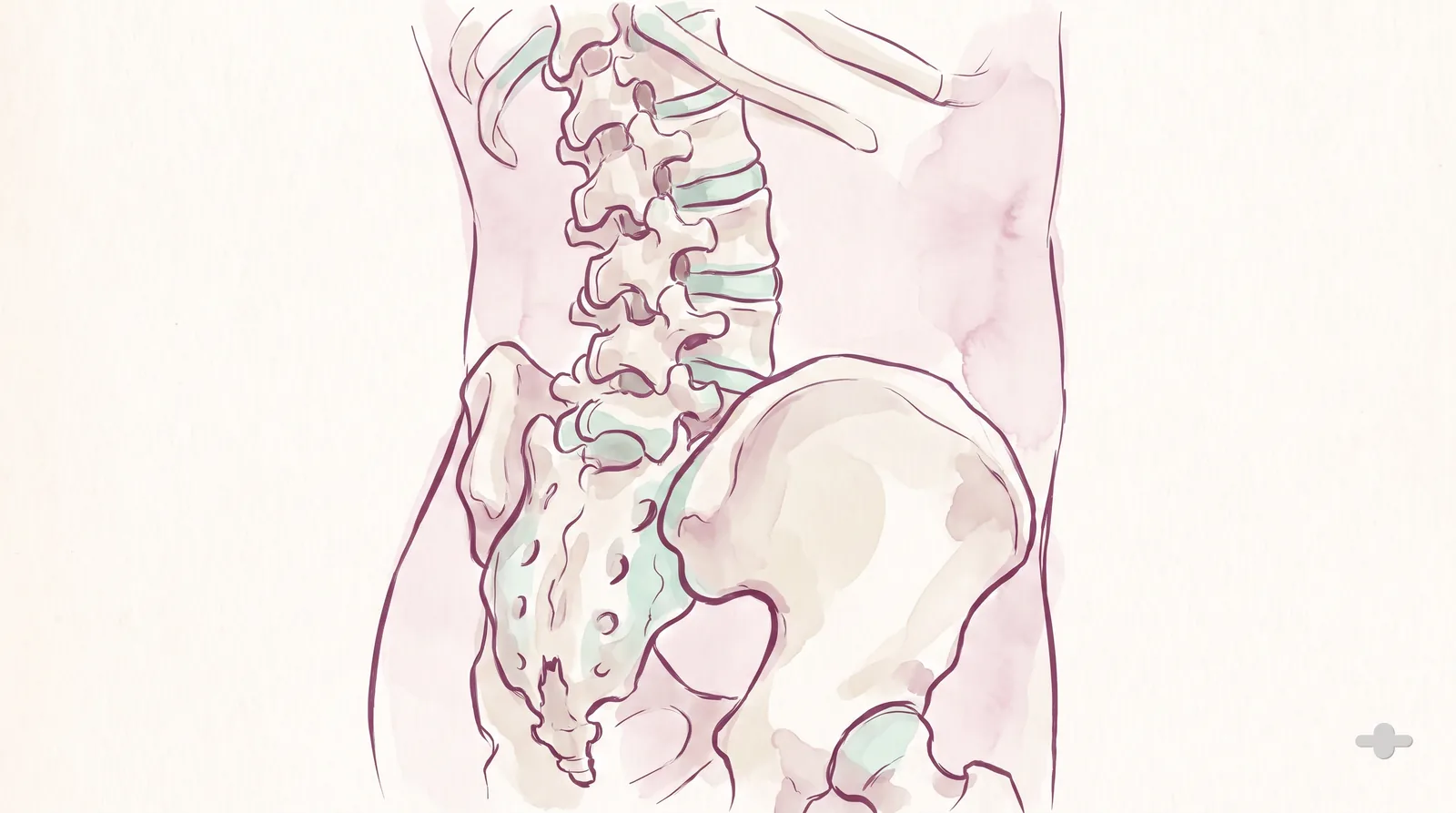
The lumbar spine is the region where the instrument matters more than the number. A goniometer across a trunk measures hips as much as it measures lumbar segments.
The reference numbers
| Motion | Reference | Watch for |
|---|---|---|
| Flexion | 60° | Double inclinometer at T12 and S2 |
| Extension | 25° | Watch for a hip-driven substitution |
| Side-bending | 25° | Compare sides rather than trusting the absolute |
Reference ranges, not pass marks
Reference values below are the AAOS figures as reproduced in Norkin & White, Measurement of Joint Motion: A Guide to Goniometry. Published sources differ by roughly 5–10° at several joints; the AMA Guides use a partly different set. Treat them as reference ranges, not pass/fail cut-offs.
Two inclinometers, not one
Trunk flexion is the sum of lumbar motion and hip motion. One inclinometer at T12 records both. Two — one at T12, one at S2 — let you subtract the pelvic contribution and read the lumbar spine on its own, which is the number the note should carry.
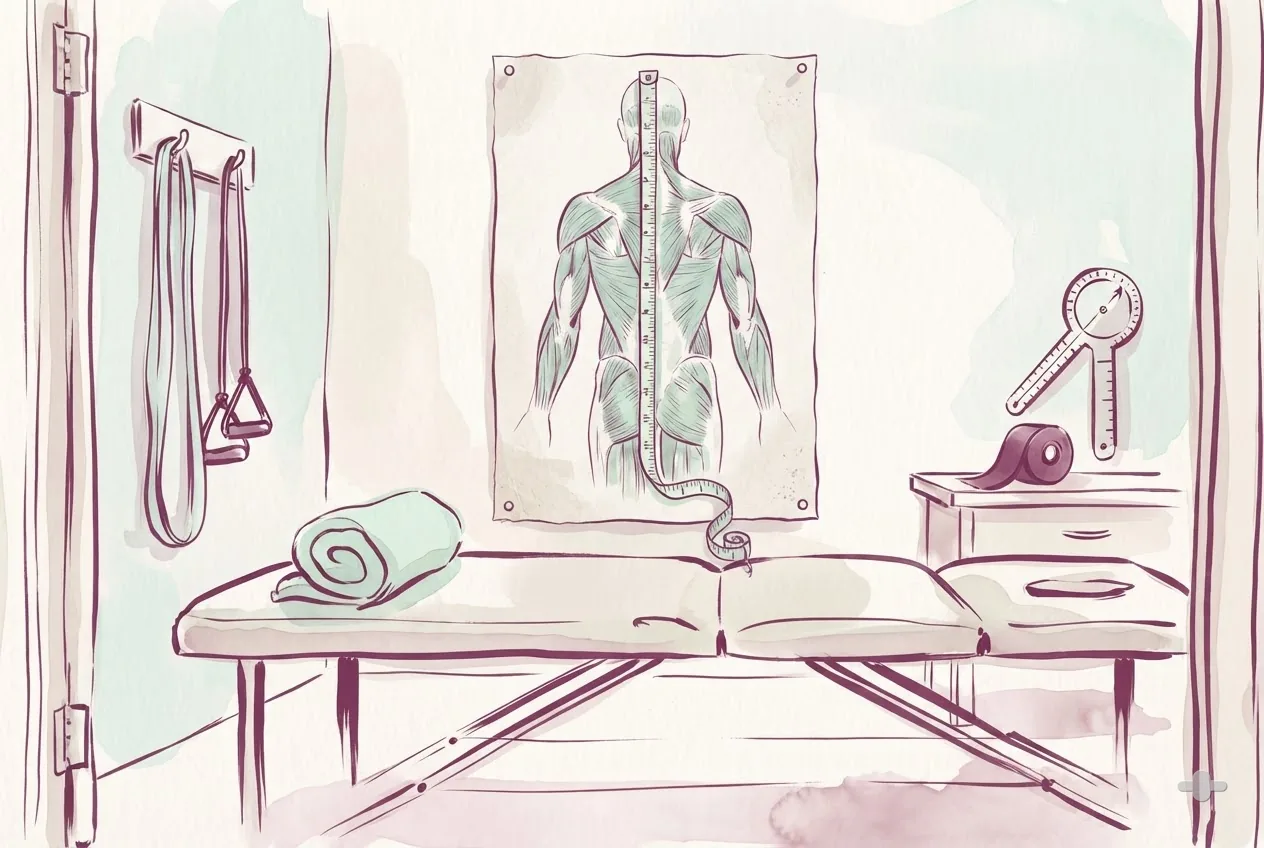
The modified Schober test is the low-tech alternative and is genuinely useful: mark 10 cm above and 5 cm below the lumbosacral junction, measure the increase on full flexion. It is repeatable, it needs a tape measure, and it is easy to teach to a colleague so that re-tests agree.
What a limitation means
An extension-limited, flexion-tolerant pattern and a flexion-limited, extension-tolerant pattern point in opposite directions clinically, and the difference is more informative than either absolute number. Record which motion reproduces the patient’s familiar pain, not just which is smallest.
A lateral shift that corrects with the pain is a different animal from one that does not. Note it separately; it will not show up in a degrees column.
Which motion reproduces the pain the patient came in with tells you more than which motion measures smallest.
Tracking it
Lumbar range moves fast in the first fortnight of an acute episode and then plateaus. Measure at evaluation, at the mid-point of the certified plan and at discharge, and keep the same instrument throughout.
Pre and post within a single session is worth doing on manual therapy visits — see the worked note in the SOAP example — because it is what turns a treatment description into evidence of effect.
Related: the full ROM chart, the worked SOAP note, the measurement guide.
Red flag — refer out
A range that worsens against treatment, or a sudden loss with pain out of proportion to the mechanism, is not a measurement problem. Stop measuring and refer.
Empirical adult values by age and sex: Soucie JM et al. Range of motion measurements: reference values and a database for comparison studies. Haemophilia. 2011;17(3):500-507 — the CDC-funded normal joint ROM study, which measured healthy subjects by age and sex.
Sources
- Norkin CC, White DJ. Measurement of Joint Motion: A Guide to Goniometry — the AAOS reference values as reproduced there; published sources differ by roughly 5–10° at several joints
- Soucie JM et al. Range of motion measurements: reference values and a database for comparison studies. Haemophilia. 2011;17(3):500–507 — the CDC-funded normal-ROM study, measured by age and sex · read 2026-10-18
Keep reading
Upper extremity range of motion norms
Shoulder, elbow, forearm, wrist and hand norms in one reference table.
Knee range of motion norms
Knee flexion and extension norms, CDC values by age and sex, and what daily tasks need.
Ankle range of motion norms
Ankle DF, PF, inversion and eversion norms, CDC means by age and sex, and the lunge test.
Visit fee calculator
Price a cash-pay visit from your own overhead, time and target margin.
Published 2026-09-04 · reviewed 2026-09-04