Hip range of motion norms
2026-10-18 · 7 min read
The hip is the joint where sloppy stabilisation produces the biggest fake numbers. Almost every over-reading is the pelvis moving with the femur.
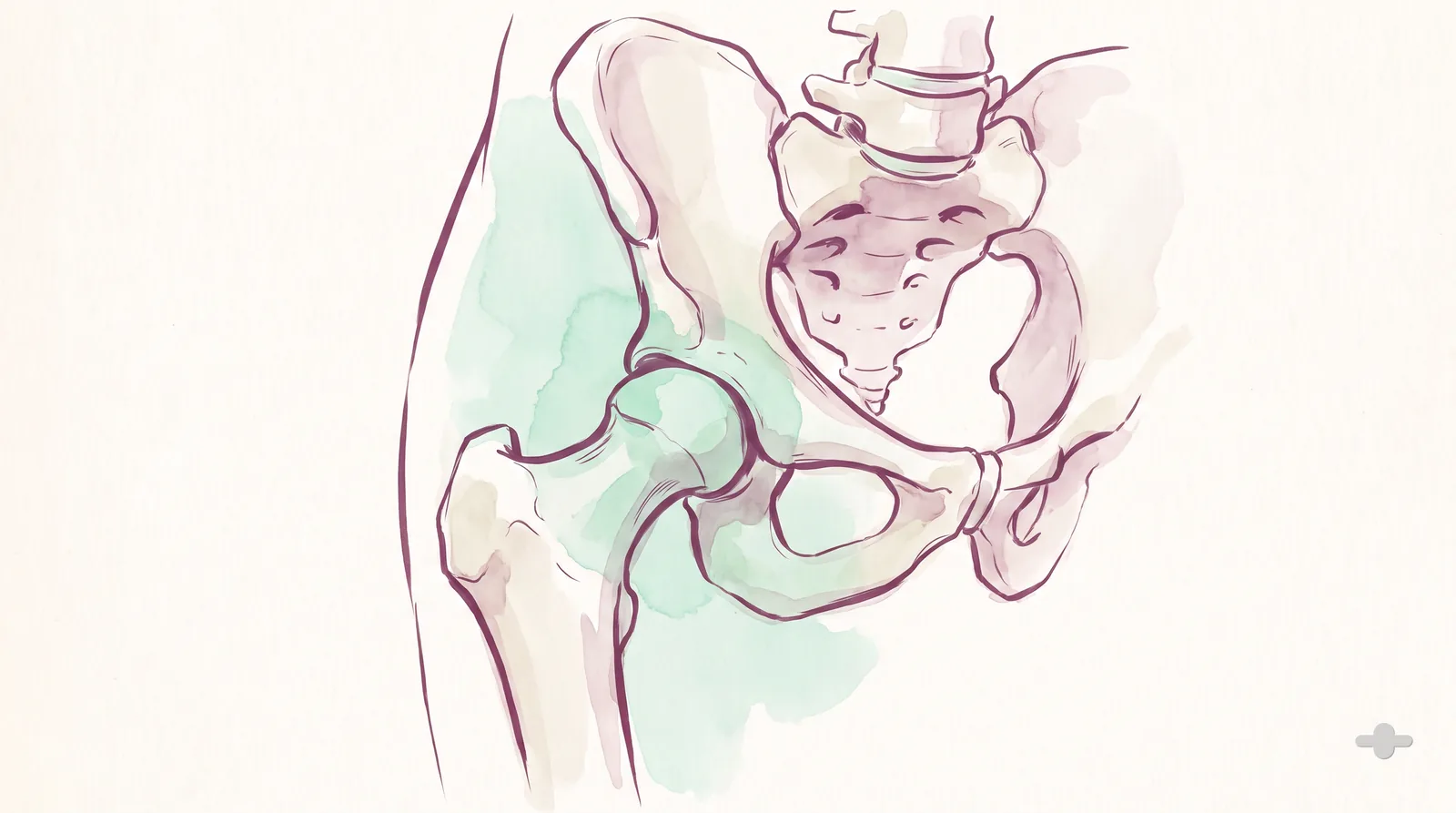
The reference numbers
| Motion | Reference | Watch for |
|---|---|---|
| Flexion | 120° | Knee bent; straight-leg flexion is limited by hamstring, not hip |
| Extension | 30° | Prone, with the pelvis held down |
| Abduction | 45° | Stop the moment the pelvis starts to tilt |
| Internal rotation | 45° | Early loss is a recognised osteoarthritis sign |
| External rotation | 45° | Always compared against the other side |
Reference ranges, not pass marks
Reference values below are the AAOS figures as reproduced in Norkin & White, Measurement of Joint Motion: A Guide to Goniometry. Published sources differ by roughly 5–10° at several joints; the AMA Guides use a partly different set. Treat them as reference ranges, not pass/fail cut-offs.
Measuring them
Stabilisation is the whole technique. For abduction, one hand on the opposite ASIS tells you the instant the pelvis joins in — that is the end of the range, whatever the leg does next.
For extension, prone with a hand across the sacrum. For rotation, prone with the knee at ninety degrees is repeatable and comfortable; seated rotation reads differently and the two should not be mixed within one episode.
Hip flexion measured with the knee straight is a hamstring test wearing a hip test’s name. Bend the knee.
What a limitation means
Loss of internal rotation with a hard, capsular end-feel is the classic early osteoarthritic hip and it often predates radiographic change and pain. Loss of extension is more often soft tissue and posture, and it shows up as a compensatory lumbar pattern long before the patient complains about the hip.
A capsular pattern — internal rotation limited most, then flexion, then abduction — is worth naming in the note when you see it, because it changes both the prognosis and the referral question.
A hip usually loses internal rotation quietly, years before it hurts — which is why the first re-measure is worth more than the first treatment.
Tracking it
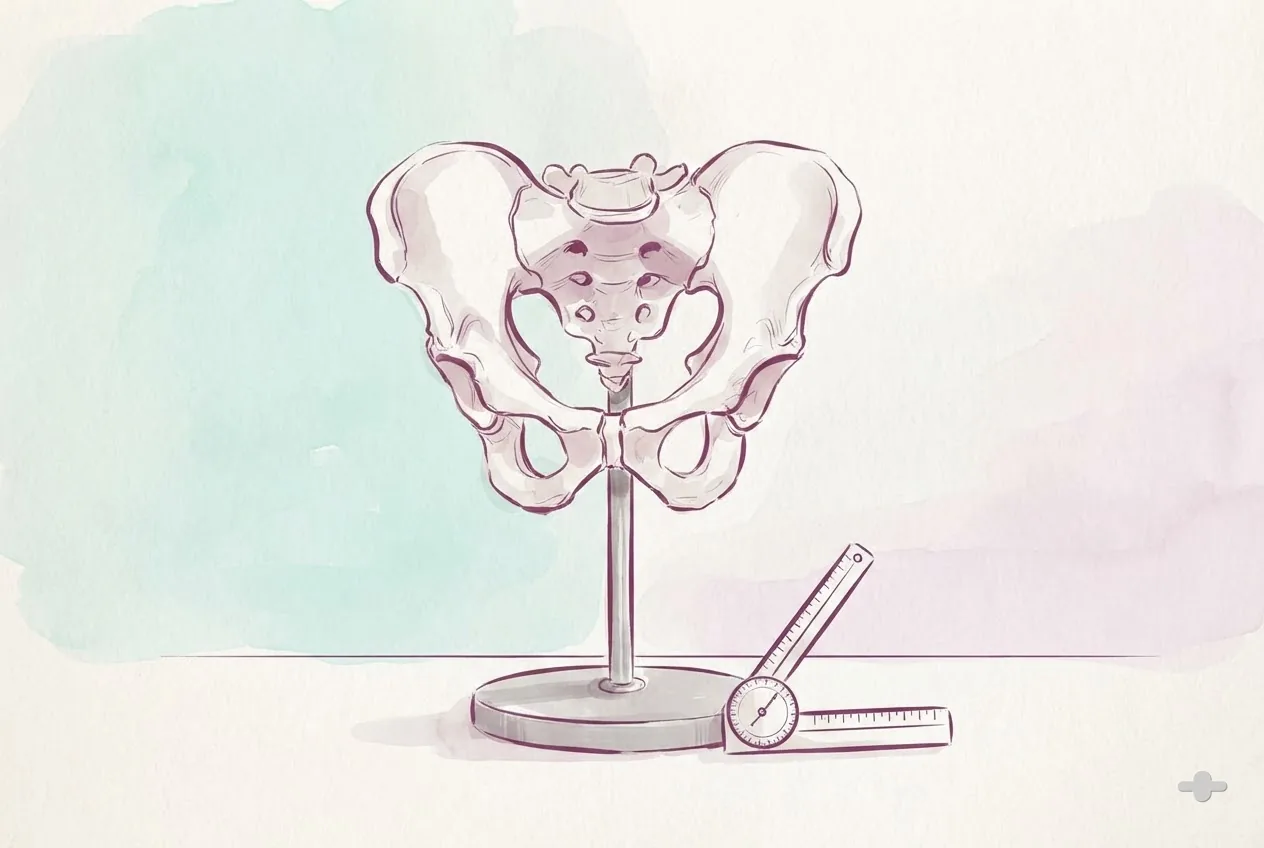
Hip ranges respond slowly. Re-measuring every visit produces noise; re-measuring at the certified interval produces signal. Put the re-measurement date in the plan of care rather than doing it on impulse.
Pair the range with a function the patient names — putting socks on, getting out of a low car — because a ten-degree gain that changes neither is not yet a result.
Related: the full ROM chart, the lumbar norms, the plan of care builder, and the goniometer measurement guide for landmarks and expected error.
Red flag — refer out
A range that worsens against treatment, or a sudden loss with pain out of proportion to the mechanism, is not a measurement problem. Stop measuring and refer.
Empirical adult values by age and sex: Soucie JM et al. Range of motion measurements: reference values and a database for comparison studies. Haemophilia. 2011;17(3):500-507 — the CDC-funded normal joint ROM study, which measured healthy subjects by age and sex.
Sources
- Norkin CC, White DJ. Measurement of Joint Motion: A Guide to Goniometry — the AAOS reference values as reproduced there; published sources differ by roughly 5–10° at several joints
- Soucie JM et al. Range of motion measurements: reference values and a database for comparison studies. Haemophilia. 2011;17(3):500–507 — the CDC-funded normal-ROM study, measured by age and sex · read 2026-10-18
Keep reading
Lumbar range of motion norms
Lumbar flexion, extension and lateral bending, plus the Schober alternative.
Upper extremity range of motion norms
Shoulder, elbow, forearm, wrist and hand norms in one reference table.
Knee range of motion norms
Knee flexion and extension norms, CDC values by age and sex, and what daily tasks need.
Physical therapy business plan template
Work through every section of an outpatient PT clinic business plan.
Published 2026-09-04 · reviewed 2026-10-18