Upper extremity range of motion norms
2026-09-04 · 8 min read
Five joints that lie to you in five different ways. Every reference number below assumes a stabilisation that most quick measurements skip.
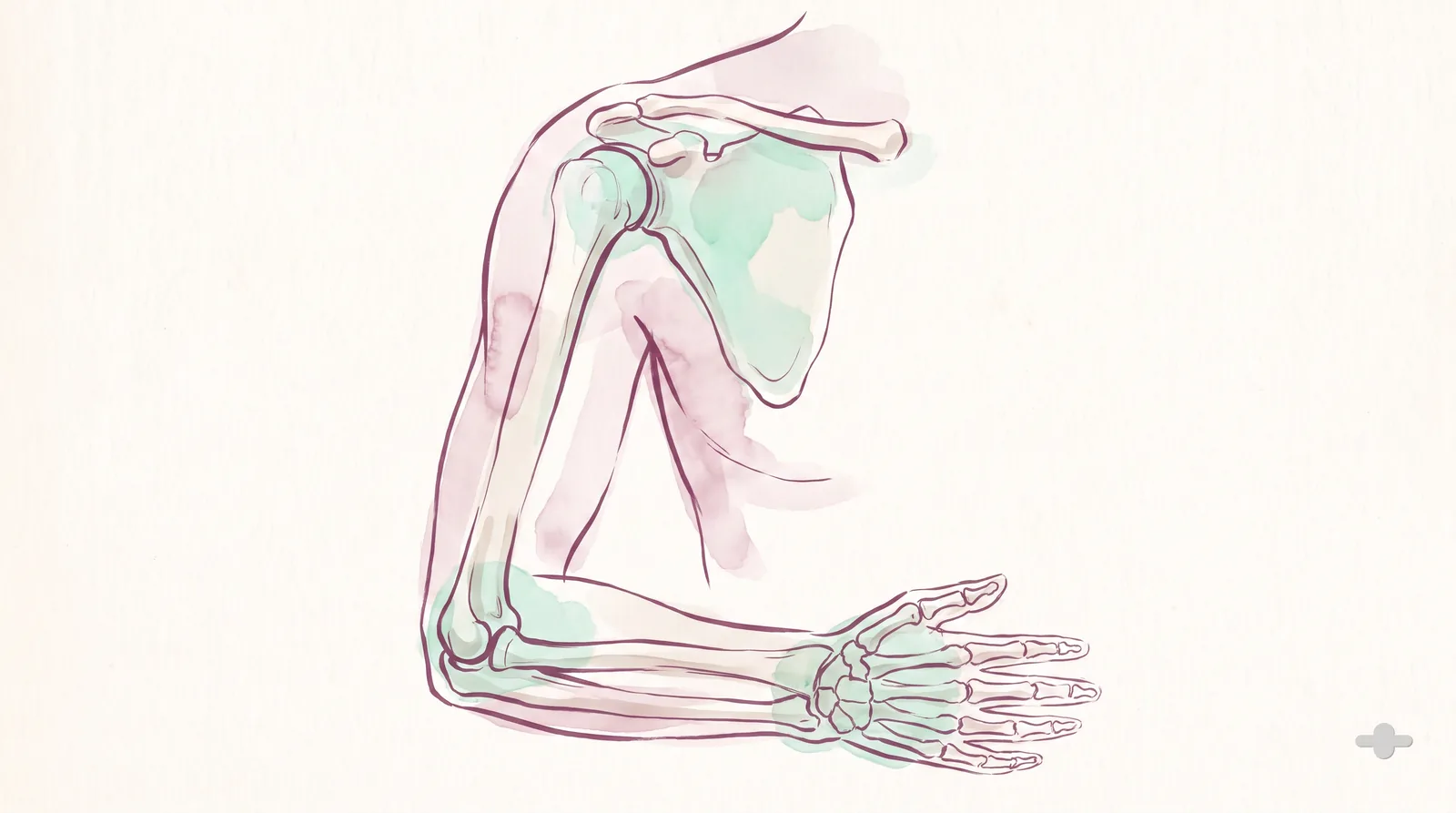
The reference table
| Motion | Reference | Watch for |
|---|---|---|
| Shoulder flexion | 180° | Stabilise the trunk or you will measure the spine |
| Shoulder abduction | 180° | Allow external rotation past 90° or it jams |
| Shoulder external rotation | 90° | Measured at 90° abduction |
| Shoulder internal rotation | 70° | The first motion lost in a stiff shoulder |
| Elbow flexion | 150° | Extension is 0°; hyperextension reads negative |
| Forearm supination | 80° | Elbow tucked in, or the shoulder cheats |
| Forearm pronation | 80° | Same rule; a pencil in the fist helps |
| Wrist flexion | 80° | Fingers relaxed — a fist limits it |
| Wrist extension | 70° | The range that decides a push-up |
| Ulnar deviation | 30° | Radial deviation is 20° |
Reference ranges, not pass marks
Reference values below are the AAOS figures as reproduced in Norkin & White, Measurement of Joint Motion: A Guide to Goniometry. Published sources differ by roughly 5–10° at several joints; the AMA Guides use a partly different set. Treat them as reference ranges, not pass/fail cut-offs.
The substitutions to block
Shoulder flexion and abduction both recruit the trunk within a few degrees of the end range: a hand on the lateral ribcage stops the side-bend that otherwise buys twenty free degrees. Forearm rotation recruits the shoulder unless the elbow is held against the ribs.
Wrist flexion recruits the fingers — a clenched fist tightens the extensors and shortens the range you read. Ask for relaxed fingers and say why, or you will record a tendon length as a joint range.
Internal rotation is the one to measure carefully, because it is usually the first thing a stiff shoulder loses and the last thing it gets back.
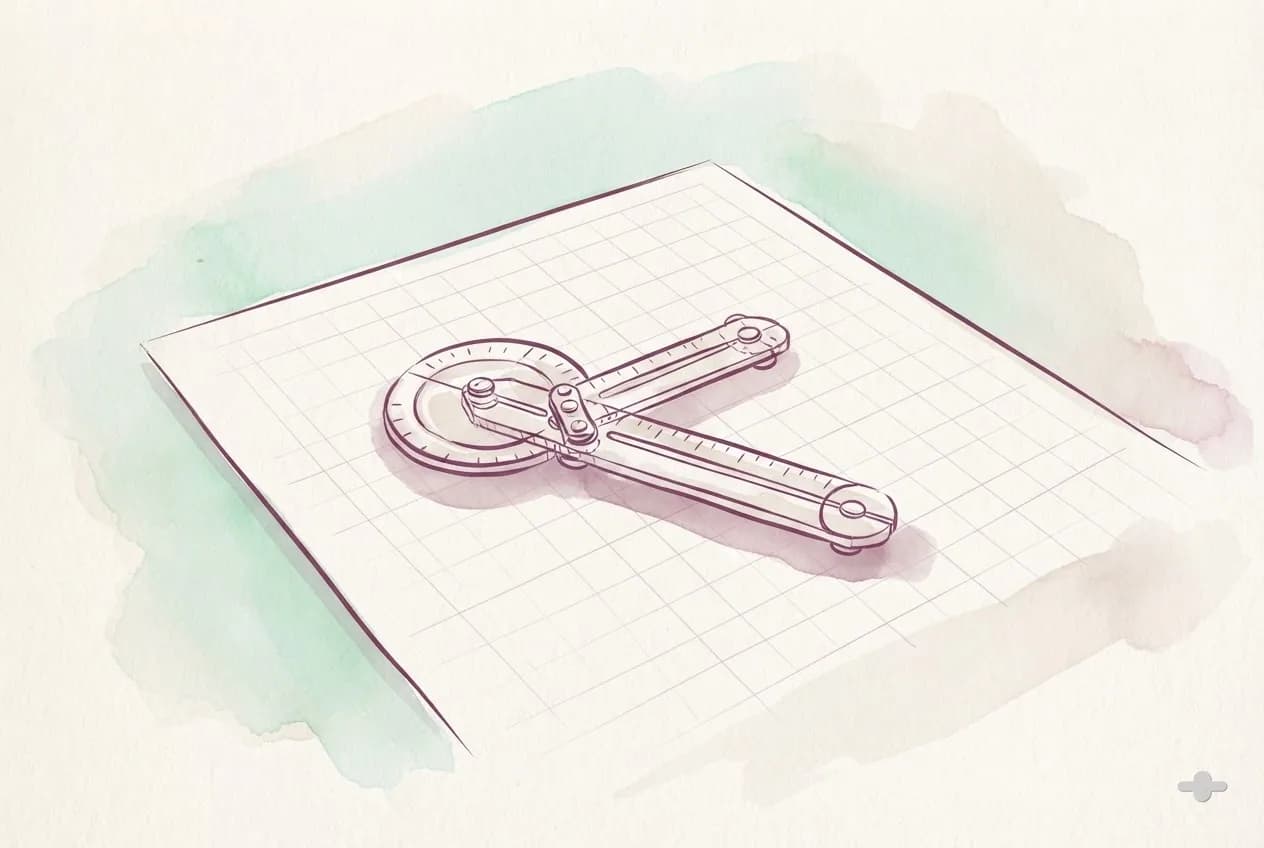
Tie it to the arm, not the joint
The upper limb is used as a unit, which is why the standard patient-reported measure for it is scored across the whole arm rather than per joint. Pair a degrees column with a functional score — the DASH calculator does the arithmetic — and the two together say more than either alone.
A shoulder that gains fifteen degrees of external rotation while the functional score does not move is usually an avoidance problem rather than a range problem.
Patients do not use a shoulder, an elbow and a wrist. They use an arm — measure the joints, then ask what the arm can reach.
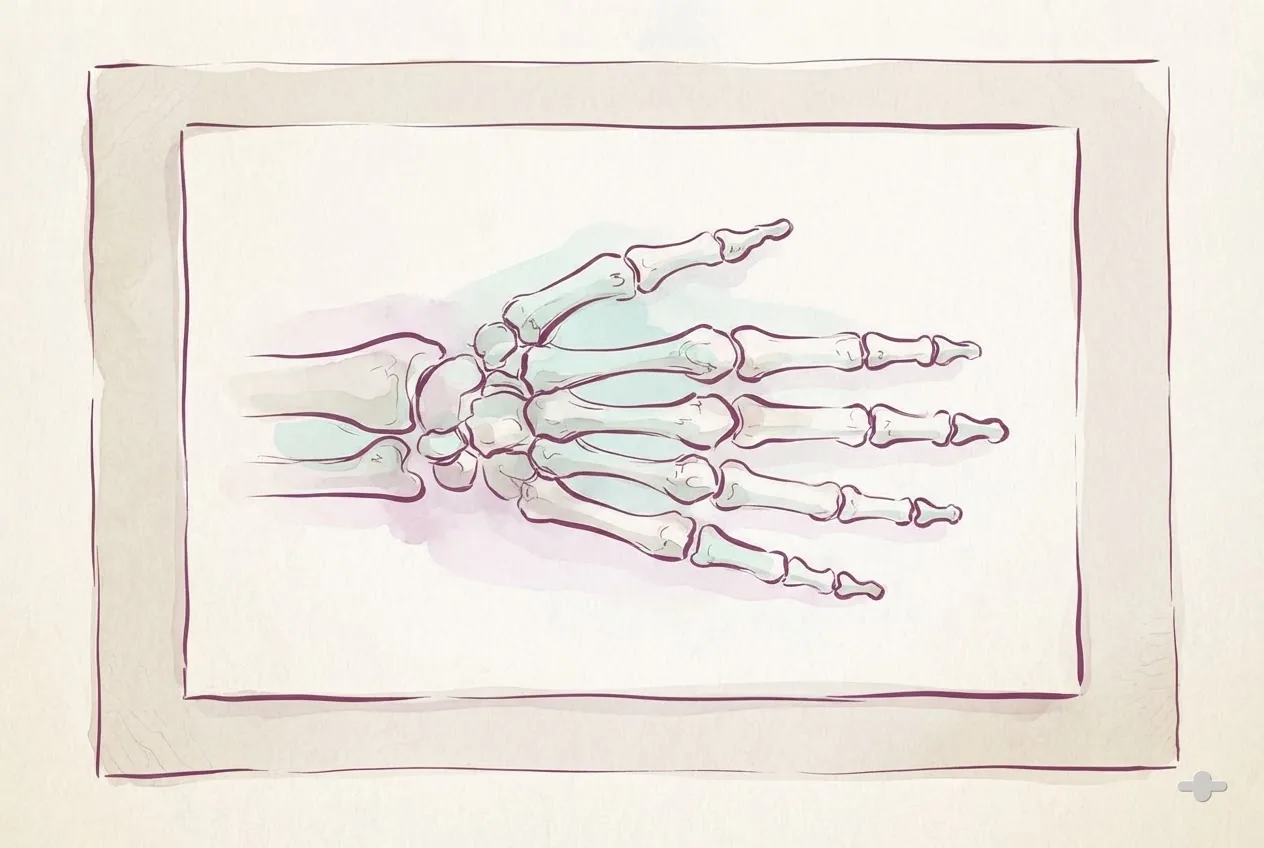
Tracking it
Measure both arms. Dominance produces small real differences, and a ten-degree asymmetry in a non-dominant limb reads differently from the same number in the dominant one.
Fix the position and record it. A shoulder measured supine and re-measured seated has not been re-measured.
Related: the DASH calculator, the full ROM chart, the measurement guide.
Red flag — refer out
A range that worsens against treatment, or a sudden loss with pain out of proportion to the mechanism, is not a measurement problem. Stop measuring and refer.
Empirical adult values by age and sex: Soucie JM et al. Range of motion measurements: reference values and a database for comparison studies. Haemophilia. 2011;17(3):500-507 — the CDC-funded normal joint ROM study, which measured healthy subjects by age and sex.
Sources
- Norkin CC, White DJ. Measurement of Joint Motion: A Guide to Goniometry — the AAOS reference values as reproduced there; published sources differ by roughly 5–10° at several joints
- Soucie JM et al. Range of motion measurements: reference values and a database for comparison studies. Haemophilia. 2011;17(3):500–507 — the CDC-funded normal-ROM study, measured by age and sex · read 2026-10-18
- Institute for Work & Health — the DASH Outcome Measure — 30-item self-report questionnaire, developed with the American Academy of Orthopaedic Surgeons · read 2026-09-04
Keep reading
Knee range of motion norms
Knee flexion and extension norms, CDC values by age and sex, and what daily tasks need.
Ankle range of motion norms
Ankle DF, PF, inversion and eversion norms, CDC means by age and sex, and the lunge test.
Resistance band exercises, by tension
Band work by colour and tension, with sets, reps and progression rules.
Physical therapist salary
National and state pay for physical therapists, straight from BLS data.
Published 2026-09-04 · reviewed 2026-09-04