Resistance band exercises, by tension
2026-10-18 · 10 min read
A band is not a lighter dumbbell. It gets harder the further you pull it, which changes where in the range the work happens — and that is the whole reason to choose one.
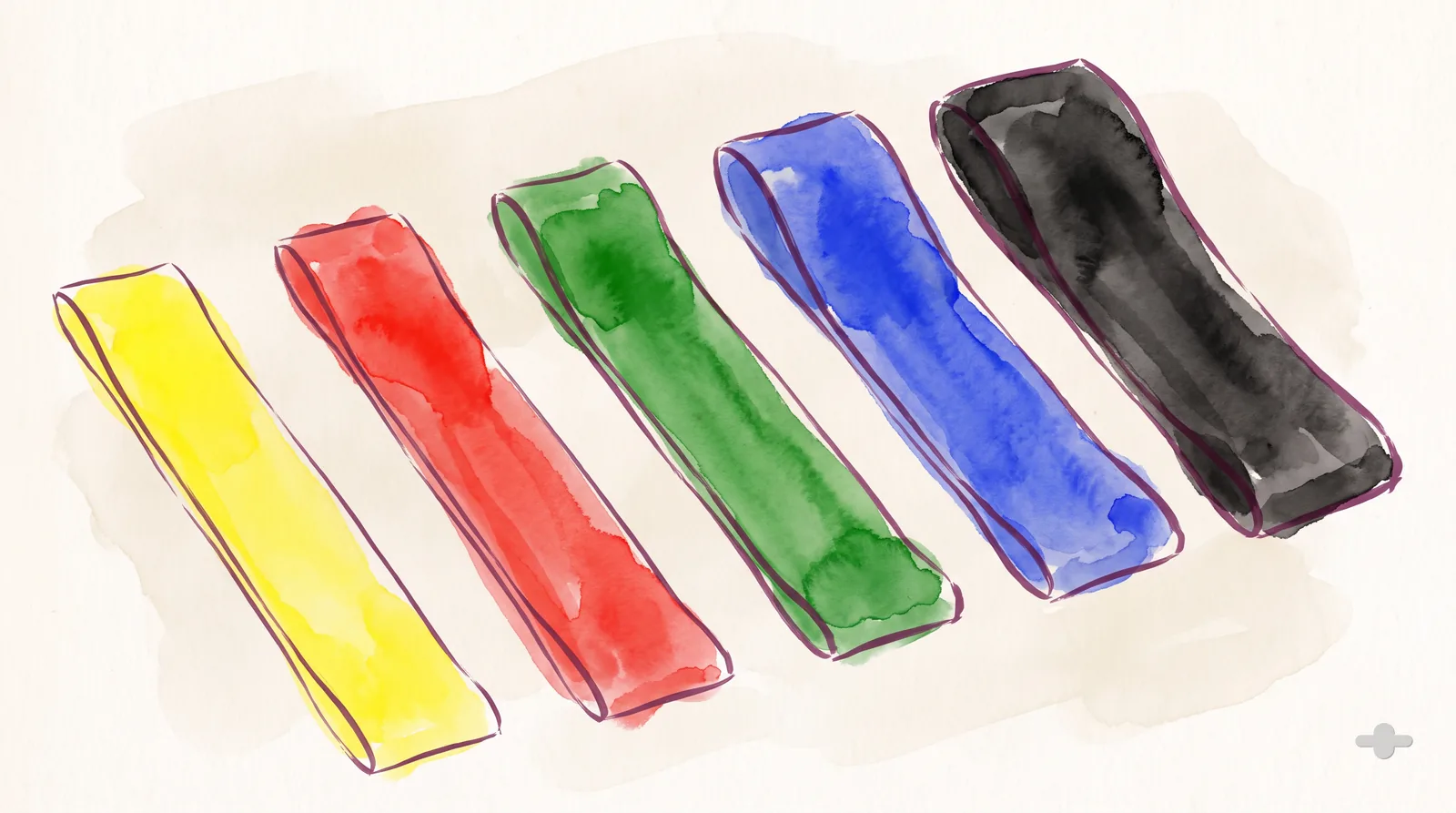
How a band loads you
Elastic resistance rises with elongation. A dumbbell is hardest where the lever is longest, usually somewhere in the middle of the range; a band is hardest at the end, where it is stretched furthest. That makes bands very good at the outer range — the last twenty degrees of shoulder external rotation, the top of a scapular retraction — and mediocre at loading the inner range where many patients are weakest.
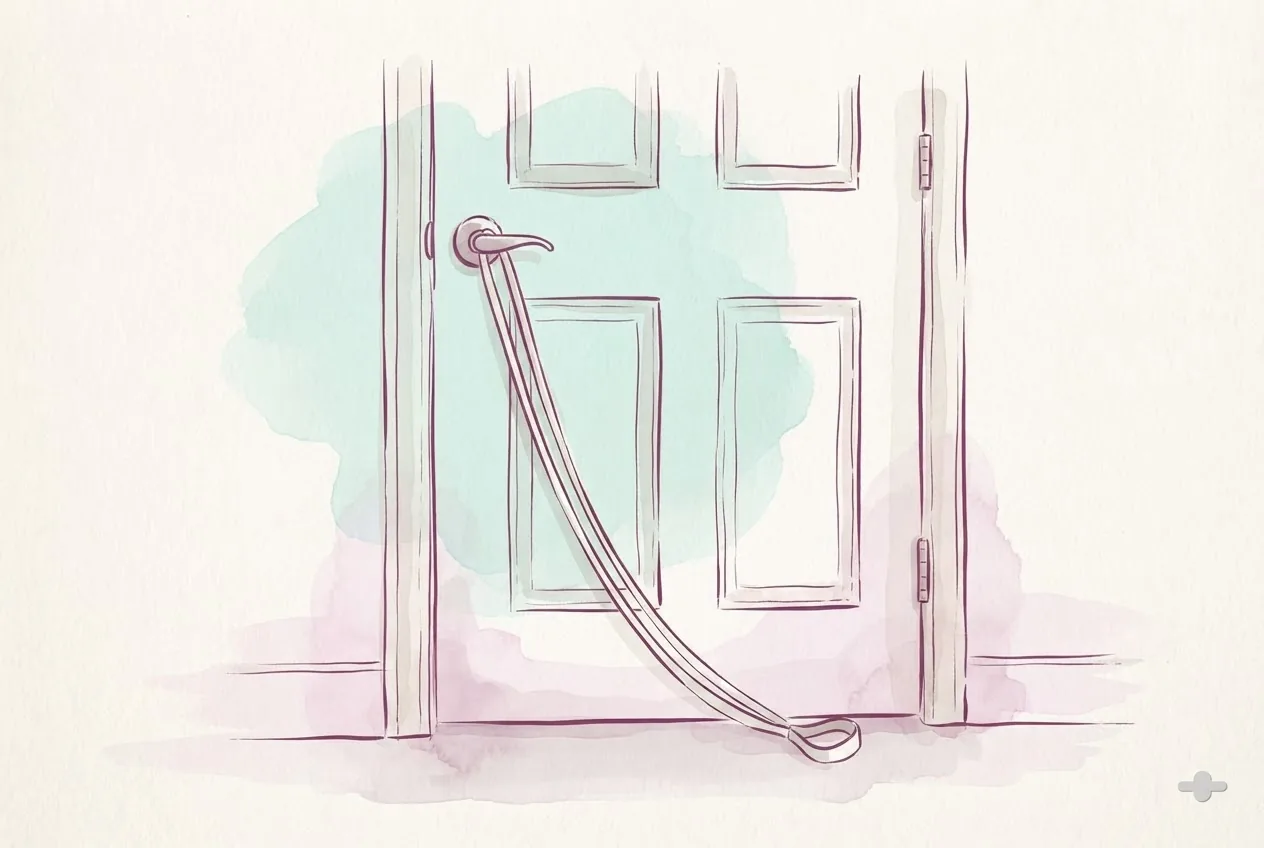
Two practical consequences. Anchor height changes the exercise more than band colour does. And a band that feels easy at the start and brutal at the end is not defective; that is the tool working as designed.
Colour is not a standard
Band colours are a manufacturer’s convention. One brand’s green sits between another’s red and blue. There is no cross-brand tension standard, so a handout that says “green band” and nothing else is an instruction the patient cannot follow in a different shop.
Write the word, hand over the band
Every band bar on this site carries a text label beside it for that reason — colour alone never encodes the meaning. Send the patient home with the physical band you mean, and write the tension word on the sheet.
A programme that progresses
Banded row
Anchor the band at chest height and step back until it is just taut with the arms straight.
Pull the elbows past the ribs, shoulders down, without leaning back to finish the rep.
Let the band draw the arms forward under control — the return is where the range is kept.
3 × 12 · 2 s hold at the ribs
External rotation at 0° abduction
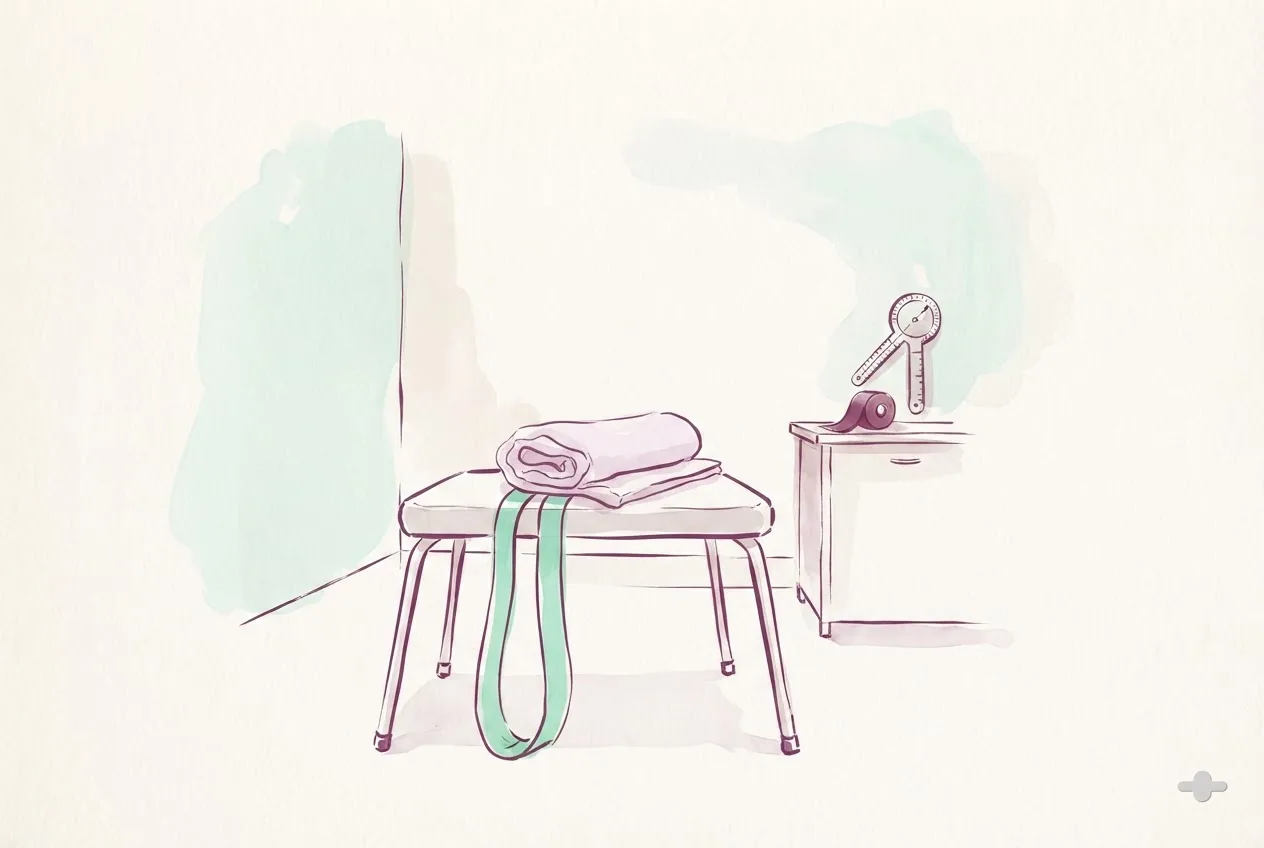
Stand side-on to the anchor with a rolled towel held between the elbow and the ribs.
Turn the forearm away from the body; the upper arm and the trunk do not move.
Come back slowly to the start — this is a forearm movement, never a shoulder shrug.
3 × 15 · 20 s rest
Pull-apart
Hold the band at shoulder width, arms straight in front, thumbs turned up.
Draw the hands apart until the band reaches the chest and squeeze for a beat.
Return under tension with the shoulders down for the whole set.
2 × 20 · 1 s squeeze
Monster walk
Loop the band just above the knees and take a quarter-squat position.
Step sideways, keeping the knees pushed out against the band the whole time.
Keep the feet quiet — a loud landing means the step was longer than the control.
3 × 12 steps each way
Banded hip hinge
Set the band across the hip crease, anchored in front at hip height.
Push the hips back against the band with the shins upright and the spine long.
Stand up by squeezing the glutes; the band, not the low back, does the returning.
3 × 10 · 2 s at the bottom
Anti-rotation press
Stand side-on to a chest-height anchor and hold the band at the sternum with both hands.
Press the hands straight out and hold; the ribs stay down and the trunk does not turn.
Bring the hands back to the chest before the shoulders start to drift toward the anchor.
3 × 8 each side · 3 s hold
Progress in this order: range, then repetitions, then tension. Jumping a band colour before the movement is clean simply moves the compensation somewhere you cannot see.
| Week | Change | Why |
|---|---|---|
| 1–2 | Same band, full range, quality | Motor pattern before load |
| 3–4 | Same band, +25% reps | Volume is the safer variable |
| 5–6 | Next band, drop reps back | Tension last, and never with reps |
Writing the prescription
Four numbers per exercise: sets, reps, hold, and an effort target. The effort target is what makes the sheet self-correcting on a bad day — a patient at RPE 13 does less when they are tired without needing permission.
The programme that gets done is short, specific, and on the fridge.
The home programme builder prints exactly that, with the tension bar and the word beside it. Keep it to four movements; adherence collapses past about fifteen minutes. Clinics that prefer video to paper can see what the paid platforms offer in the home exercise program software comparison.
Red flag — refer out
Band work that reproduces radicular symptoms down the limb, or that a patient cannot attempt because of new weakness, stops. Progressive neurological loss is a referral, not a lighter band.
Sources
Keep reading
Neck pain exercises, staged
A staged neck programme, from deep flexor holds to scapular loading.
Goniometer measurement
Axis, stationary arm, moving arm — and how much error to expect.
Berg Balance Scale (BBS): scoring, cut-offs and a printable score sheet
The 14 items scored 0-4, fall-risk cut-offs by study, age norms and real change on a re-test.
Chiropractic marketing
The channels that fill a chiropractic schedule, ranked by cost per new patient.
Published 2026-09-04 · reviewed 2026-10-18