Neck pain exercises, staged
2026-09-04 · 9 min read
Three stages with a criterion to leave each one. The commonest mistake is not choosing the wrong exercise — it is running stage three’s loading on a neck that has not finished stage one.
Stage 1 — deep flexor endurance
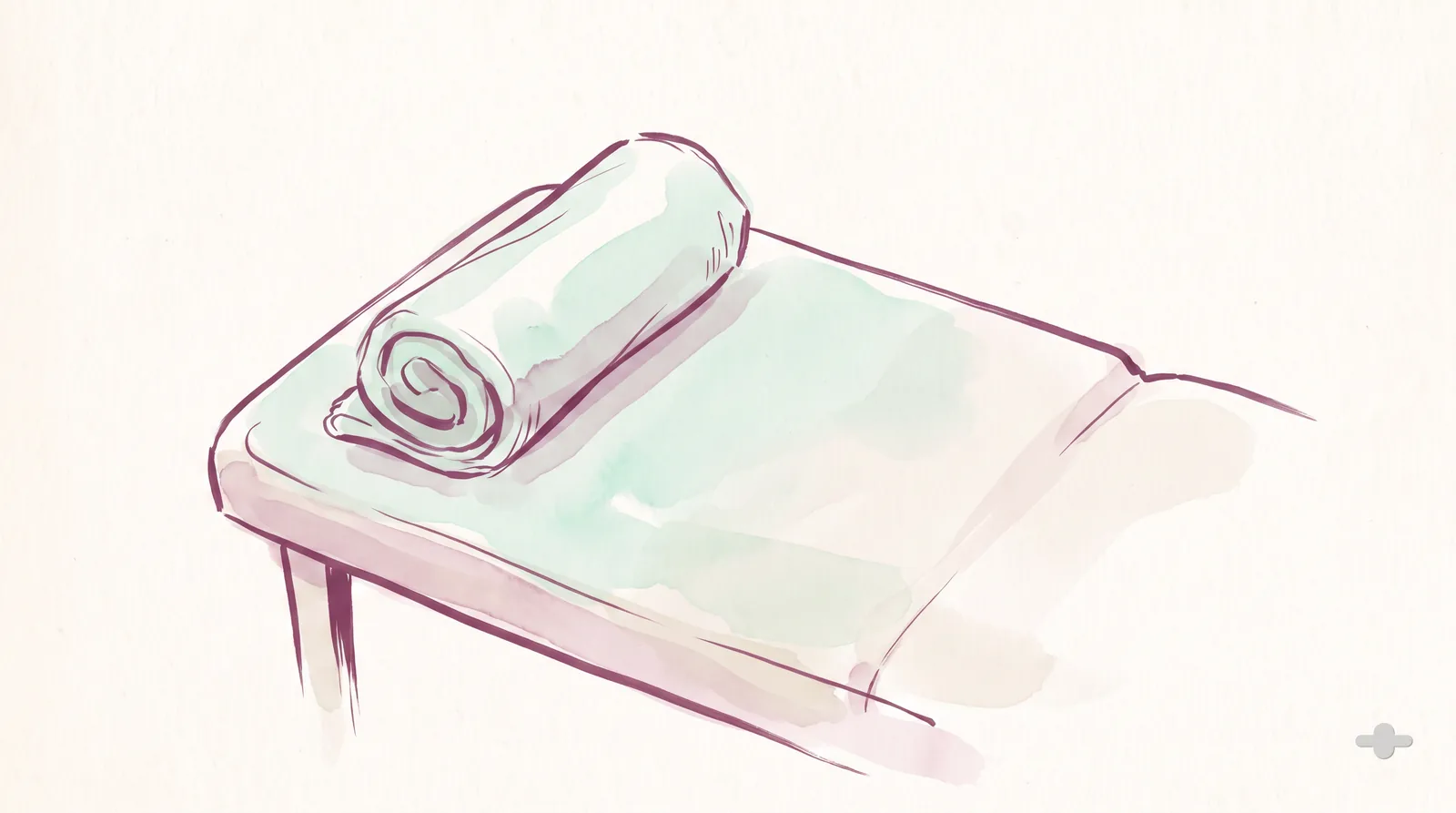
Chin nods in supine, held. Not a crunch, not a chin tuck driven by the superficial flexors — a small nod as though saying yes, with the head still resting. The target is time, not repetitions: build from ten seconds to thirty, five to ten repetitions, once or twice a day.
| Exercise | Dose | Leave this stage when |
|---|---|---|
| Supine chin nod, held | 10 × 10 s | 30-second holds with no superficial flexor tremor, and no symptom flare next day |
| Seated postural reset | hourly, 3 breaths |
Deep flexor endurance is the least dramatic part of a neck programme and the part patients abandon first, because nothing about it feels like exercise. Say that out loud when you prescribe it.
Stage 2 — range
Active rotation and side-bending to comfort, slowly, both directions, several times a day. The purpose is not to force range but to remove the guarding that follows an acute episode — which usually moves within a fortnight once the patient stops protecting the neck all day.
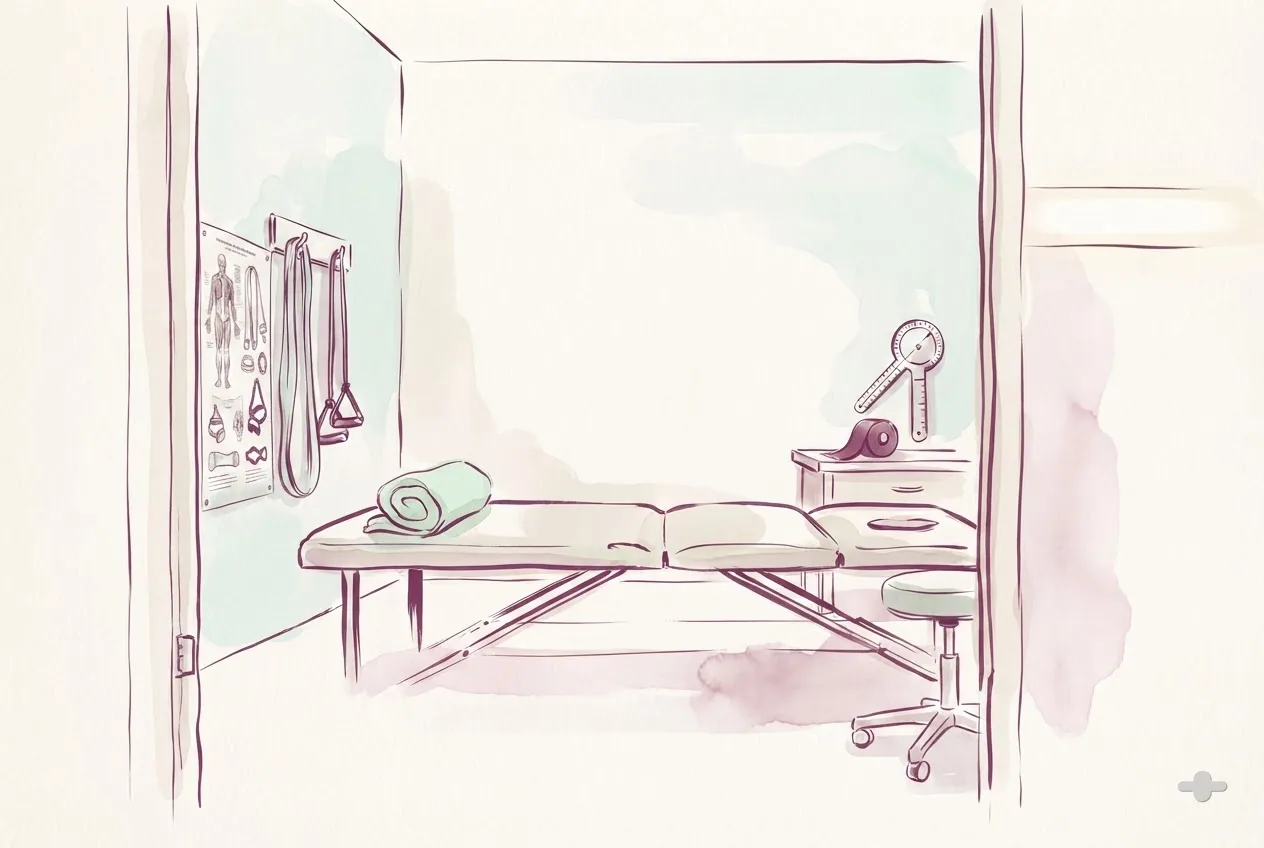
Measure rather than guess. Rotation limited on one side by more than about ten degrees is the finding worth acting on, and the cervical norms give the reference to compare against.
Stage 3 — scapular and cervical load
Banded row
Anchor the band at chest height and step back until the arms are straight and the band is taut.
Pull the elbows past the ribs; the chin stays level and the neck stays long.
Return under control without letting the shoulders ride up at the front of the movement.
3 × 12 · 2 s hold
Band pull-apart
Hold the band at shoulder width in front of the chest, arms straight, thumbs up.
Draw the hands apart until the band reaches the sternum — no shrug at the end.
Let the hands come back together slowly; the tension never goes fully slack.
2 × 20 · 1 s squeeze
Prone Y raise with a light band
Lie face down with a rolled towel under the forehead and a light band held between the hands.
Reach the arms overhead into a Y with the thumbs turned up.
Lift a few centimetres, hold, and lower — the forehead stays on the towel throughout.
3 × 10 · 2 s at the top
Cervical isometric, 4 directions
Loop a light band at head height (or use a flat palm) against the forehead.
Press the head into the resistance at about half effort — the head does not move.
Hold ten seconds, breathe out, release, then repeat at the back of the head and each temple.
4 × 10 s · 30 s rest
Load is what makes the gains hold. A neck that is comfortable at rest and untrained under load reverts the first time the patient carries something heavy up a flight of stairs. The band progression applies here unchanged: range, then reps, then tension.
The desk conversation
Posture advice has a poor record as a treatment and a good one as a pacing tool. The useful version is not “sit up straight” but “change position every thirty minutes” — because the provocation most desk-related necks report is duration, not alignment.
The best posture is the next one.
Put the interval on the handout with the exercises, using the programme builder, so it is a prescription rather than advice.
Red flag — refer out
Neck pain with progressive arm weakness, gait change, drop attacks, unexplained weight loss, or a headache pattern unlike anything the patient has had before is not an exercise problem. Refer.
Keep reading
Goniometer measurement
Axis, stationary arm, moving arm — and how much error to expect.
Berg Balance Scale (BBS): scoring, cut-offs and a printable score sheet
The 14 items scored 0-4, fall-risk cut-offs by study, age norms and real change on a re-test.
Home exercise program software
What HEP software buys you, the published prices, and why adherence decides.
Physical therapy vs chiropractor
Training, scope, what a visit looks like and which one to see first.
Published 2026-09-04 · reviewed 2026-09-04